
Benefits of collaborative working in adult social care
When people talk about collaborative work in adult social care, they often jump straight to strategies, frameworks and policies. But what makes the biggest difference sometimes is the simplest thing – shared space and the right environment to work together.
This is what has happened at our North East Hub. Moving teams, training and client activity into one shared space has created a level of connection that none of us realised was missing until we had it.
Organisations sometimes try to force collaboration through workshops and planned meetings, but giving people the space for it to happen naturally can be far more effective in bringing teams together.
Can bringing people back into central locations make a difference?
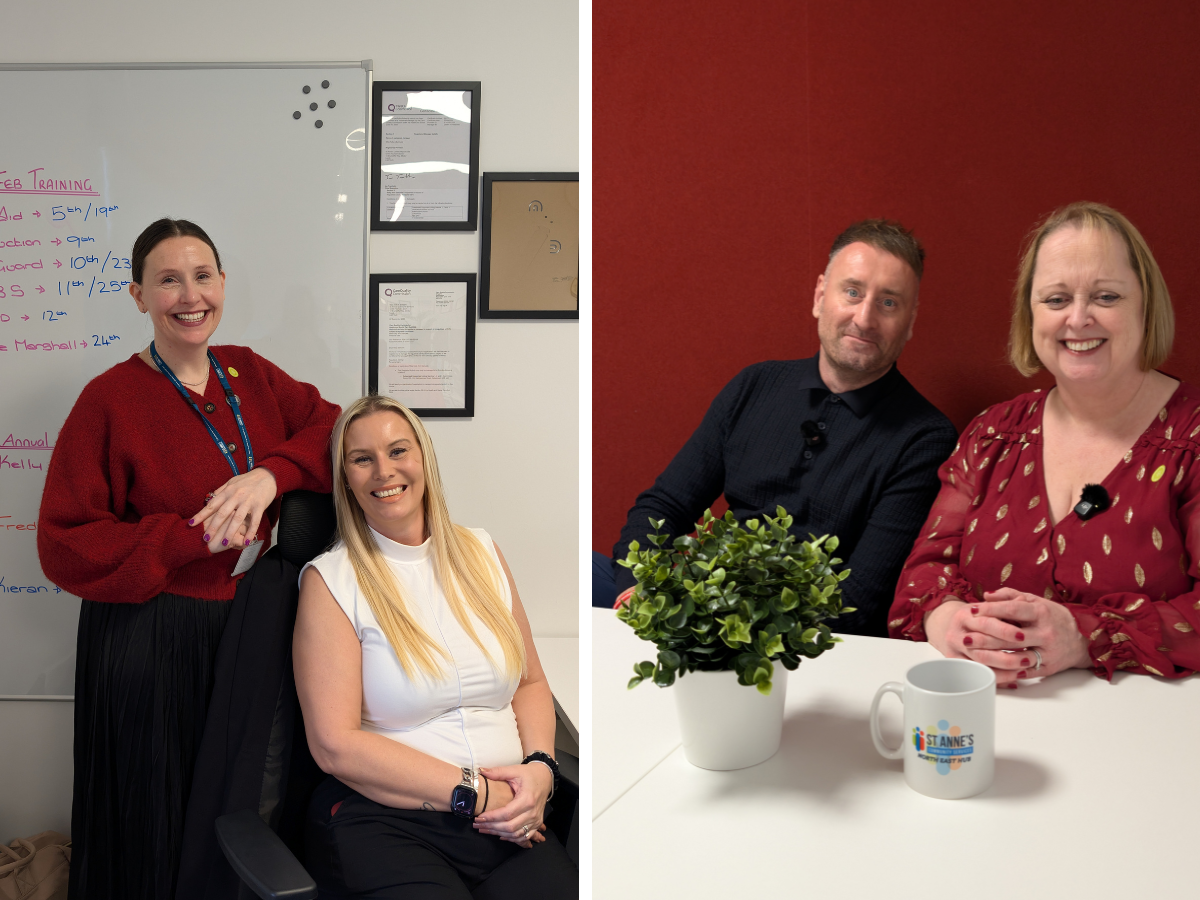
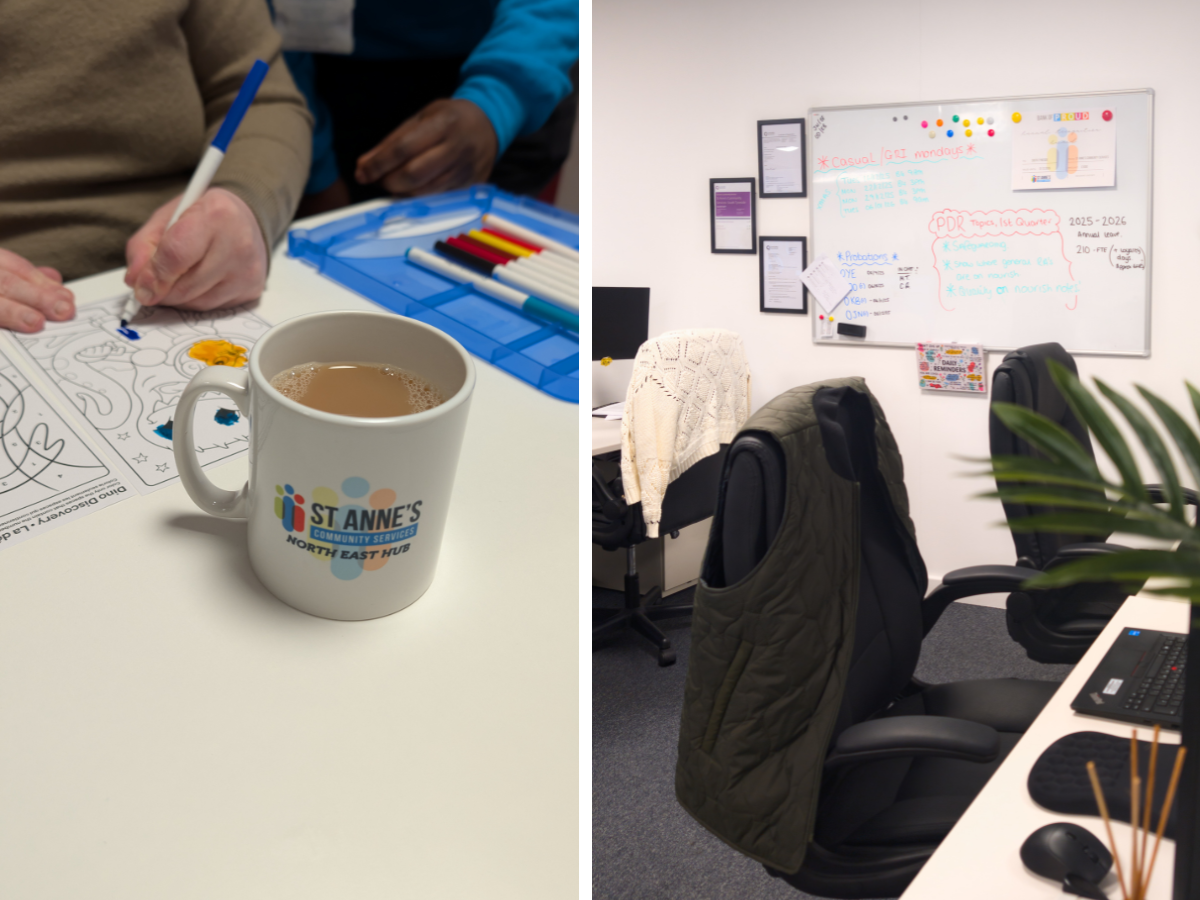
Before the North East Hub opened, managers were based in small offices across the region. Many worked alone most days. They were managing large responsibilities without the natural support that comes from having colleagues nearby. Now, everyone is in one place, the whole dynamic has shifted.
People turn their chairs and solve problems together. They share knowledge without needing to book time in diaries. They compare notes, give each other perspective and help things move faster for clients.
The loneliness that some managers talked about has lifted. The pace of work has also improved, and the confidence in decision making is stronger because people are not doing it in isolation.
When leaders have the space to talk and work alongside each other, they make decisions faster and deliver better outcomes for the people they support.
How Covid changed collaboration
Over the last few years, Covid has changed the way people work. For many, having the flexibility to work from home has been a real positive. It has helped with family life, travel and wellbeing. But it also created distance between teams. People were working hard but doing it separately, and that made collaboration harder to keep alive.
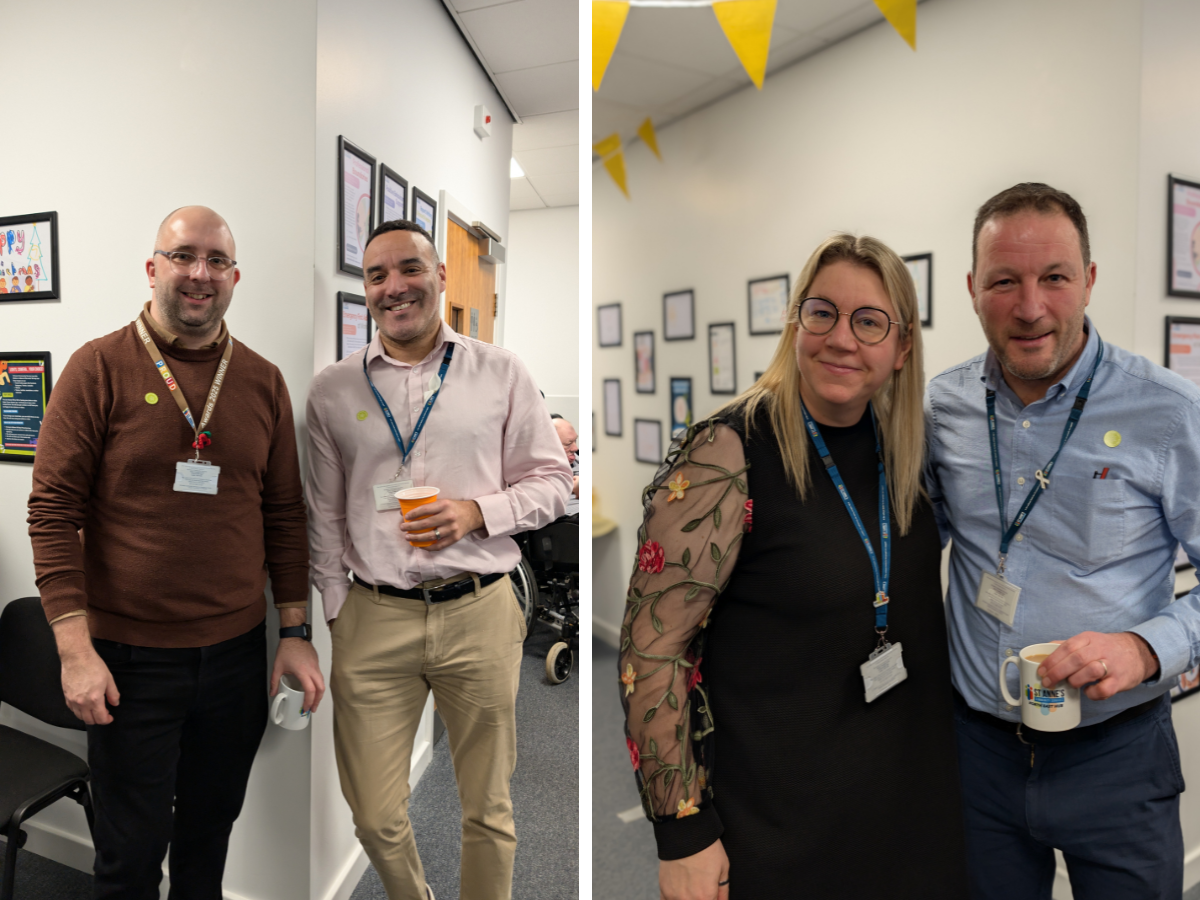
What St Anne’s has done well is offer the best of both approaches. People have the option to work from different spaces, but the North East Hub gives everyone a shared place to come back to. It means managers can drop in for a couple of hours, catch up with colleagues, sort something out face‑to‑face and then get back out to services. Support workers can come in for training and feel part of something bigger. Clients can come and go in a space that feels familiar.
The impact of collaboration for clients
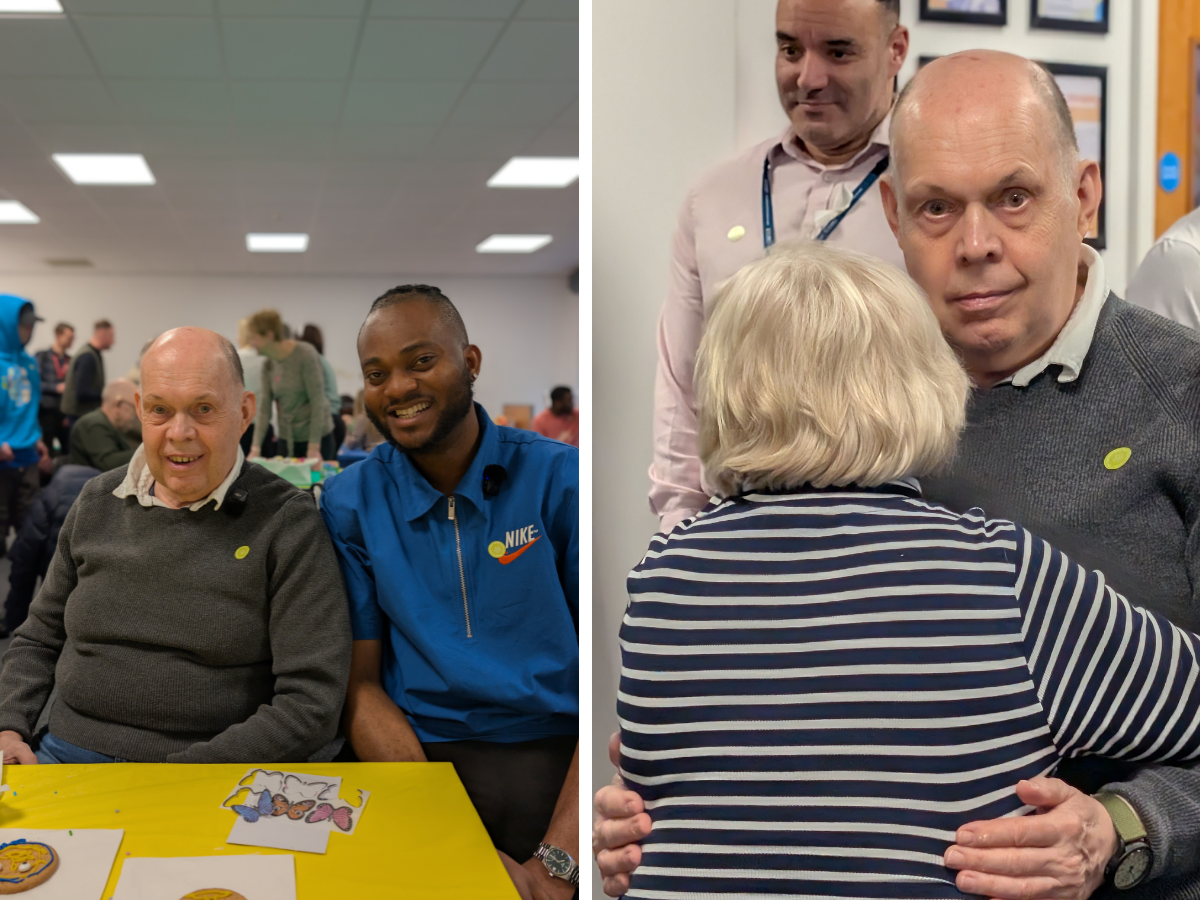
The most noticeable change has come from clients using the North East Hub. In our old Gateshead office, clients rarely visited. It was not as accessible or welcoming, but the North East Hub is different. Clients come in regularly now, some just pop in for a chat, some attend group meetings and others take part in training as co-facilitators. We even have clients helping managers plan new sessions – a clear sign of how the space naturally sparks co‑production.
Clients feel ownership of the space, they see it as theirs.
People who rarely visited our offices before were dancing, making crafts, getting their nails done and spending time with people from other services. Many told us this is a place where they feel listened to and where friendships can grow.
Having one central location has transformed staff training
For support workers, training used to mean travelling across the North East to different venues. Staff who could not drive often had to take several buses, and some even had to stay overnight when training was held in Leeds. It created stress before the training had even begun.
Now everything is in one reliable place – staff know exactly where they are going, attendance has gone up and managers can see at a glance who has arrived.
It helps us support new starters better because our inductions feel calm and consistent. The training space has proper moving and handling equipment, good accessibility and enough room to run everything safely.
It also means support workers see their managers more often and feel connected to what is happening within the organisation.
Creating collaborative spaces for people (not just operations)
The North East Hub feels like a community space. There are breakout rooms where managers and deputies can have private conversations. There is a shared area where people can take a proper lunch break. There is a room set up for clients with accessible tables, lower whiteboards and sensory items. There is even a small food bank that staff and clients can use when money is tight or someone has come to training without food.
None of these things are complicated, but these small decisions added together create a big difference. They reflect the kind of culture we enjoy creating at St Anne’s – one that is community focused, thoughtful and practical.
Commissioners have noticed the difference
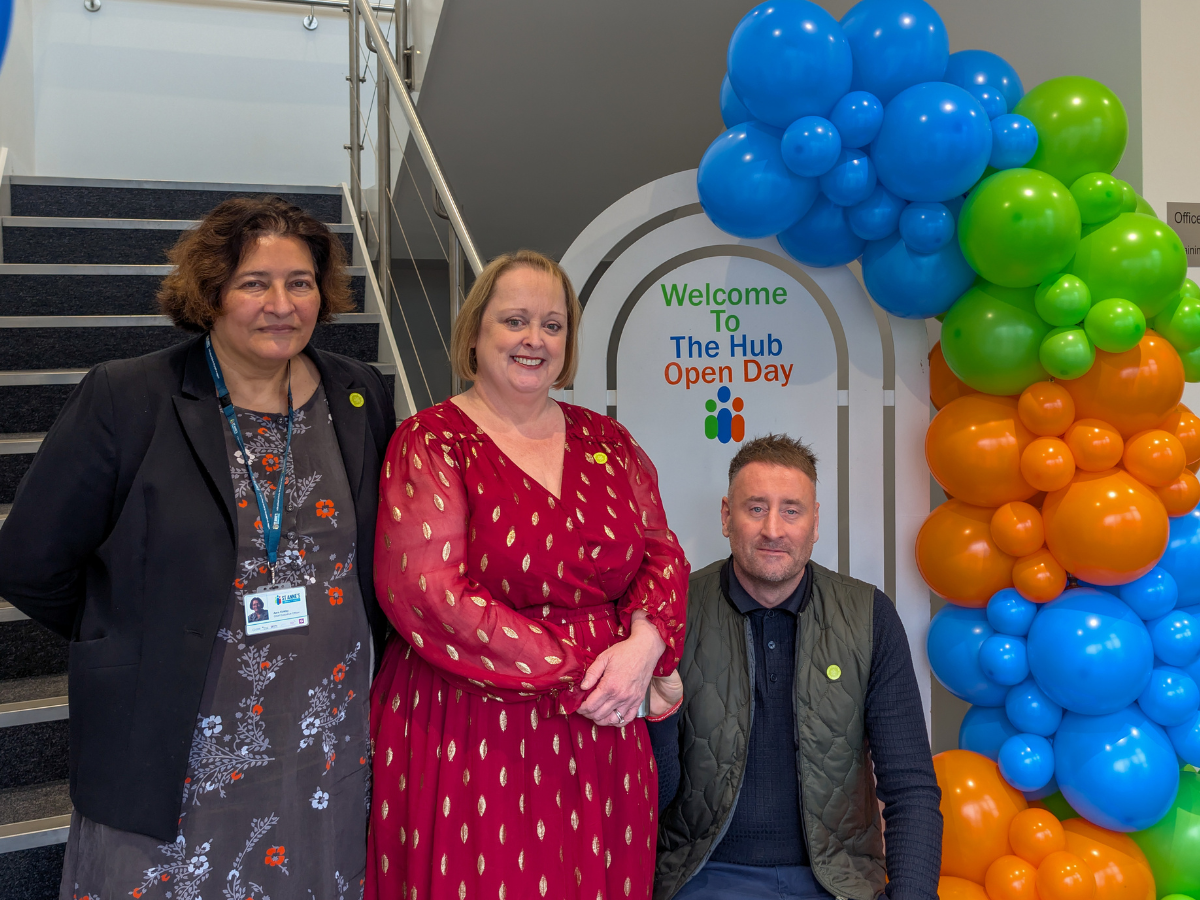
When commissioners and partners come into the North East Hub, their first reaction is always the same, they comment on how welcoming it feels. How they can visibly see client involvement, and how light and open the space is. This feels so different from the small, fragmented offices you usually see in social care.
When commissioners spend time in the North East Hub, they get a clearer sense of how our work actually comes together. Seeing managers in the same space, talking things through as they happen, shows how problems are picked up early and how support is shared across teams. Watching training take place on site gives them a feel for our Learning and Development approach and how staff are being set up well for their roles. Even the client artwork and the way people use the building help them understand that clients are involved, comfortable and valued here.
What they take away is a more complete picture of our ethos and approach. They can see how we work alongside people, how we share knowledge, and how we create environments that make involvement easier. It gives a sense of how the service operates in real life, not just in paperwork or reports.
Why collaboration works at the North East Hub
The success of the North East Hub is not really about the building, even though it is a lovely space to work in. It is about what the space makes possible. Managers can learn from each other in real time, and support workers feel more connected instead of being spread across the region in separate services. Clients are involved in ways that feel genuine and collaborative, and the setup makes co‑production easier because people are already together and conversations happen naturally.
The overall culture feels more open and supportive than before. This matters for us as an organisation because the quality of care depends on how well people communicate, how confident teams feel and how involved clients can be in shaping what we do.
When we talk about the benefits of collaborative working in adult social care, this is what it looks like in practice. The North East Hub shows that collaboration is not something that only happens in meetings or workshops. It grows when the environment makes it easy for people to connect, share ideas and work together every day.